










AI Sales Statistics for
AI is becoming a bigger part of sales, from prospecting and lead generation to outreach automation. Companies are using it to find leads, automate repetitive
Research, practical development guides and technical experiments exploring AI search visibility, AEO and the systems used to measure and improve performance.
AEO · AI visibility · LLM tracking · Development
Research, practical guides and technical experiments exploring how brands are discovered, cited and represented across AI search.
Understand how brands appear across AI search, what influences visibility and how to measure performance beyond traditional rankings.
Explore methods for tracking mentions, citations, prompts and share of voice across AI-generated answers.
Build practical tools and experiments for analyzing AI search, automating workflows and working with search data.
Research and practical guidance on Answer Engine Optimization, from content structure and authority to measurement and tooling.
From AI agents and RAG systems to Python development and LLM experiments, QueryState explores how AI-powered search tools and workflows can be built, tested and improved.
QueryState explores how search is changing as discovery moves beyond traditional search engines and into AI-generated answers.
Experience across technical SEO, search strategy and large-scale organic growth.
About QueryStateSearch Foundations
Testing how brands are discovered, cited and represented across AI-generated answers.
Explore InsightsOngoing Research
Building tools, agents and Python workflows to explore and measure AI search.
Explore developmentTechnical experiments
Prices exclude any applicable taxes.
Explore common questions about Answer Engine Optimization, AI search visibility, LLM tracking, citation tracking and the development behind measuring performance in AI search.
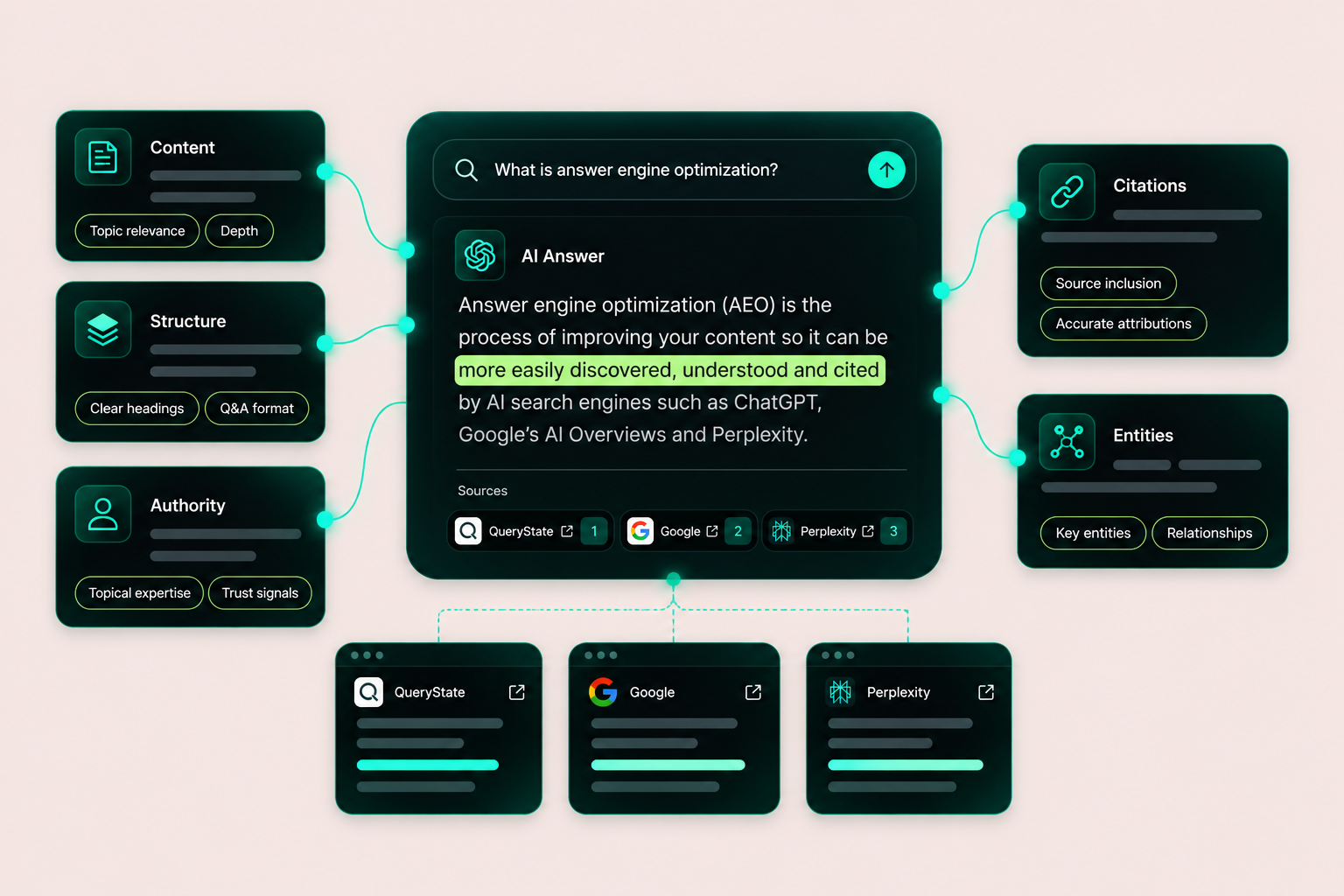
Answer Engine Optimization (AEO) is the process of improving content so it can be understood, retrieved and cited by AI search engines and answer engines. AEO focuses on how information is structured, how clearly entities and topics are explained, and the authority signals that can influence visibility in AI-generated answers.
Answer Engine Optimization works by making information easier for AI systems to discover, understand and use when generating answers. This can involve content structure, topical authority, entity relationships, citations and technical accessibility. AEO overlaps with traditional SEO, but focuses more specifically on visibility within AI-generated responses.
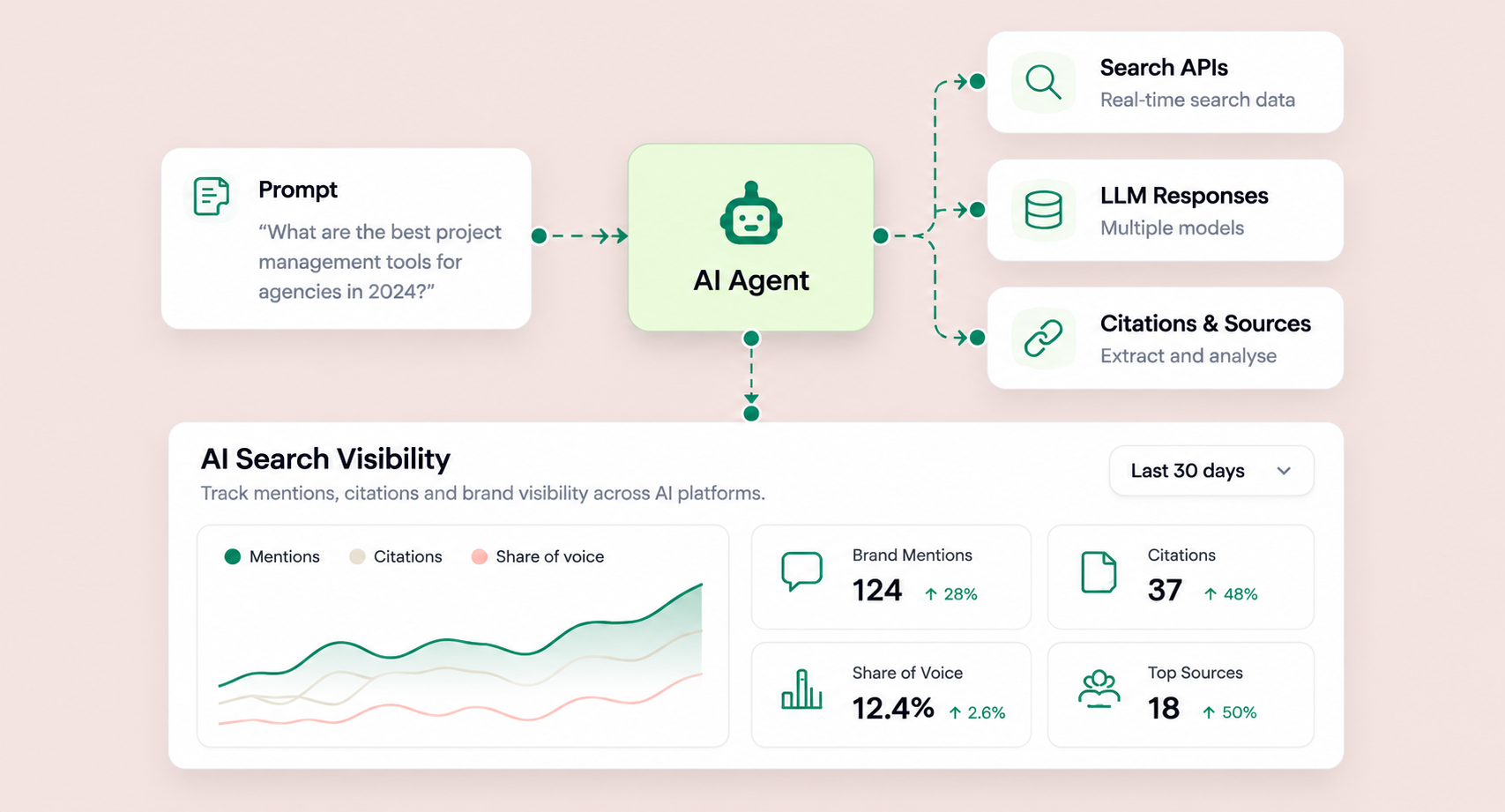
AI search visibility describes how often and how prominently a brand, website or source appears across AI-generated search experiences. Rather than measuring only traditional rankings, AI visibility can include brand mentions, citations, source inclusion, answer positioning and share of voice across different prompts and AI platforms.
LLM visibility can be measured by running relevant prompts across AI platforms and tracking how frequently a brand is mentioned, cited or recommended. Measurement can also compare competitors, citation sources, prompt categories and changes over time to build a broader picture of a brand’s visibility within AI-generated answers.
AI visibility tracking is the process of monitoring how brands appear across AI search engines and LLM-generated answers. Unlike traditional rank tracking, AI search tracking can monitor prompts, mentions, citations, competitors and share of voice to understand how visibility changes across different models, queries and time periods.
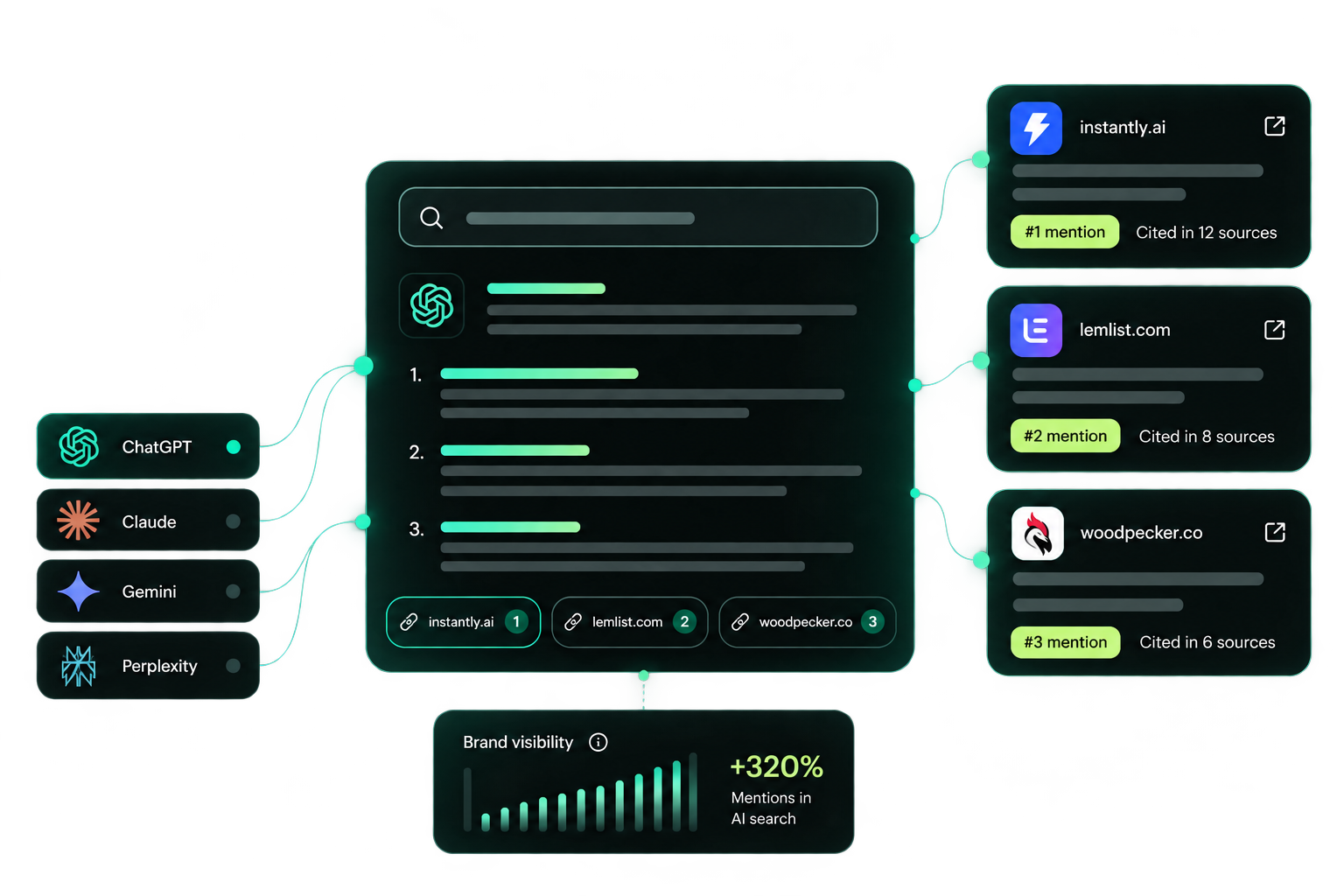
LLM citation tracking monitors the websites and sources referenced within AI-generated answers. It can be used to identify which domains are repeatedly cited, measure a site’s citation frequency, compare citation visibility against competitors and investigate the factors that may influence source selection across AI search platforms.
Python can be used to build AEO and AI search tools that automate prompt testing, collect model responses, extract citations, identify brand mentions and analyze visibility data. APIs and Python workflows can also make it possible to run experiments at a larger scale and track how AI search results change over time.
AI search tracking can be automated using APIs, Python scripts, AI agents and scheduled workflows. These systems can run prompt sets, collect AI-generated answers, extract mentions and citations, compare competitors and store historical results. Automation makes it possible to move from occasional manual checks toward repeatable AEO and LLM visibility measurement.
AI is becoming a bigger part of sales, from prospecting and lead generation to outreach automation. Companies are using it to find leads, automate repetitive
Whether you’re exploring AI visibility, search automation or a custom AI workflow, let’s talk about what you’re trying to build.